What’s the most spontaneous thing you’ve ever done?
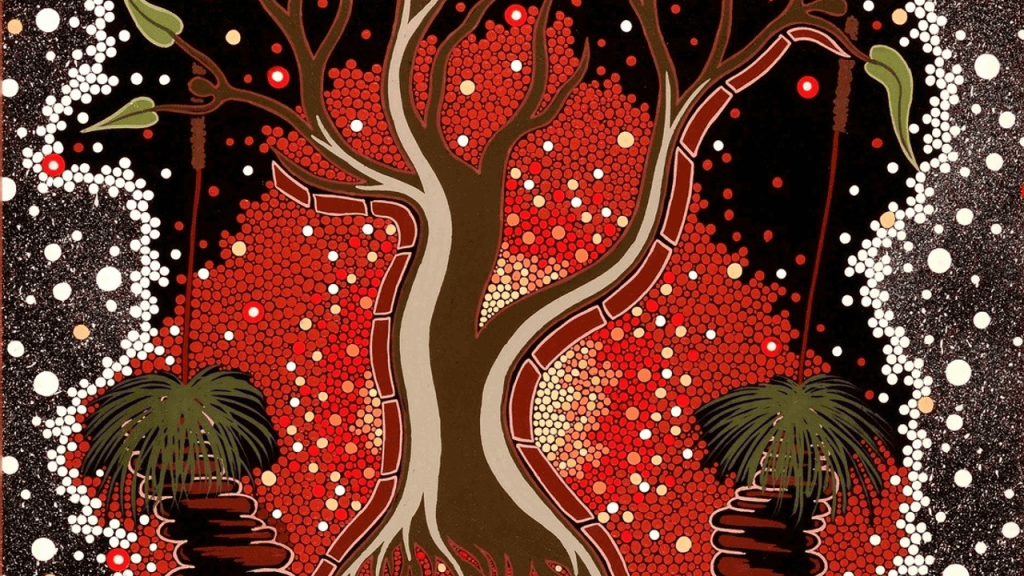
Years ago, my wife and I were driving home from a weekend away when we stopped at an art gallery and café. I saw a painting I liked and bought it immediately.
That was very unusual for me. Normally I would think carefully about something like that. I might go away, do a little research, think about whether I really wanted it, and only then make a decision. Not this time. I saw it. I liked it. I bought it.
There was simply something about the painting that connected with me. I could not explain why. I just knew that I wanted to take it home. It has hung in my office ever since. What I find interesting now is that I gradually discovered what I had bought.
Over time, I learned that the painting was connected with Dadirri, the deep listening practice associated with Aboriginal elder Dr Miriam-Rose Ungunmerr-Baumann. Dadirri is rooted in Indigenous culture and Country. Its emphasis on deep listening, stillness, patience and attention has spoken to me.
Those ideas are valuable in a busy life. We are often encouraged to move quickly, achieve more, make decisions and keep going. It can be much harder simply to stop, listen and wait.
As a Christian, I also found something familiar in this. My faith has long taught me about waiting on God, although I have not always been very good at doing it. That made me see the painting differently.
Perhaps I had responded to it before I understood why. Art can do that. Sometimes something touches us before we have the words to explain it. We are drawn to it first, and only later begin to understand what it means to us.
Looking back, perhaps that spontaneous purchase was not simply an impulse. Maybe it was a kind of recognition. Something in the painting had already connected with something in me: a desire for stillness, attentiveness, listening and presence.
And I still enjoy the irony of it. One of the most spontaneous purchases I have ever made has spent years teaching me to slow down and wait on God.
Perhaps some decisions are like that. We make them quickly but understanding them takes much longer.
Sometimes we only gradually discover what we have chosen. And, along the way, we may discover something about ourselves as well.
Here is the text of Dadirri:
Dadirri
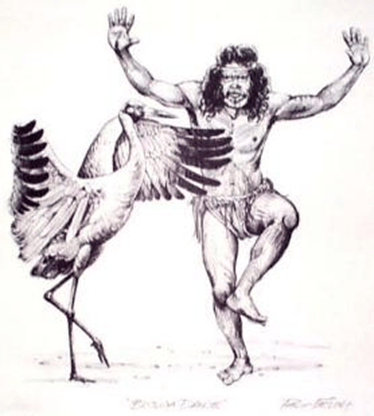
Our Aboriginal culture has taught us to be still and to wait. We do not try to hurry things up. We let them follow their natural course – like the seasons. We watch the moon in each of its phases. We wait for the rain to fill our rivers and water the thirsty earth… When twilight comes, we prepare for the night. At dawn we rise with the sun.
We watch the bush foods and wait for them to ripen before we gather them. We wait for our young people as they grow, stage by stage, through their initiation ceremonies. When a relation dies, we wait a long time with the sorrow. We own our grief and allow it to heal slowly.
We wait for the right time for our ceremonies and our meetings. The right people must be present. Everything must be done in the proper way. Careful preparations must be made. We don’t mind waiting, because we want things to be done with care. Sometimes many hours will be spent on painting the body before an important ceremony.
We don’t like to hurry. There is nothing more important than what we are attending to. There is nothing more urgent that we must hurry away for.
We wait on God, too. His time is the right time. We wait for him to make his Word clear to us. We don’t worry. We know that in time and in the spirit of dadirri (that deep listening and quiet stillness) his way will be clear.
Edited version adapted from the writings of Miriam Rose Ungunmerr


Leave a comment