What’s a movie or book that inspired you to travel?
I read The Memory Stones by Caroline Brothers three or four years ago and was deeply moved by it. The novel tells the story of a young woman who disappears during Argentina’s military dictatorship and of the child taken from her. It is both a family tragedy and a national one, tracing the consequences of secrecy, fear and loss across generations.
I read the book out of interest. I had no immediate plans to visit Argentina. Yet eighteen months ago, I found myself in Buenos Aires with a couple of free days.
Argentina has a tortured history, and that history remains visible throughout the city. Buenos Aires has the elegance of a city partly modelled on Paris, but also the weariness of a country repeatedly damaged by dictatorship, political instability and economic crisis. To walk its streets is to sense wounds, memories and unfinished stories.
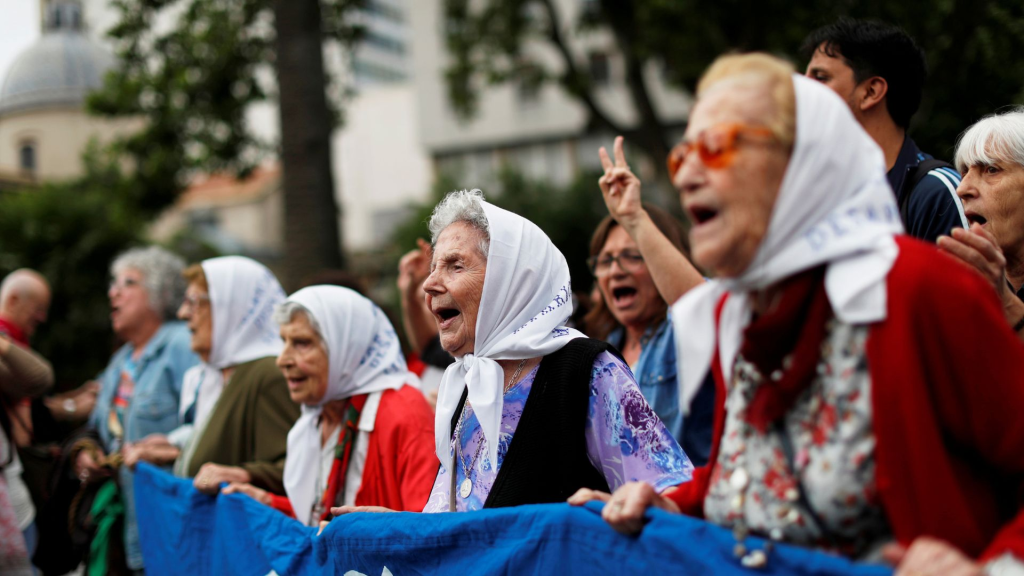
Because I had read The Memory Stones, I was determined to visit the Grandmothers of Plaza de Mayo, the human rights organisation established to find the children stolen and illegally adopted during the dictatorship of 1976 to 1983.
We visited Plaza de Mayo on a Saturday morning. Protests were taking place against current government policies, as they so often do in that square. It was not simply an attractive public space surrounded by significant buildings. It was a place where grief, courage, protest and memory had accumulated. We then visited the Grandmothers of Plaza de Mayo.
Nothing had prepared us for the emotional weight of that encounter. The stories of children stolen from their families, identities erased and lives spent searching were almost unbearable. Words could not express what we felt when we left. We simply wept.
The novel had prepared me to understand something of the history, but the visit made that history human. These were not merely events from a dark period in Argentina’s past. They were children, parents and grandparents. They were families whose lives had been torn apart, and whose search for truth continues.
Travel is an encounter with memory. Places are never merely what we see. A pleasant square, an elegant government building or an ordinary suburban street may carry histories of disappearance, resistance and grief.
Books can become a kind of second map. The ordinary map tells us where the streets and landmarks are. A story can reveal what happened there, what has been lost and what people are still struggling to recover.
In Argentina, remembering has been an act of justice. The Mothers and Grandmothers of Plaza de Mayo refused to allow their children and grandchildren to be erased. They continued to name the disappeared, search for the stolen children and resist the silence imposed by those in power.
The title The Memory Stones suggests something durable. Stones can mark graves, build memorials and bear witness. They remain when governments change and official stories are rewritten.
The book did not cause me to travel to Argentina. But it shaped what I did when I arrived. Without it, I might have admired the architecture, visited the usual attractions and moved on. Instead, I wanted to understand something of the history beneath the beauty.


Leave a Reply