What’s a book, movie, or TV show that you
wish you could experience again for the first time?
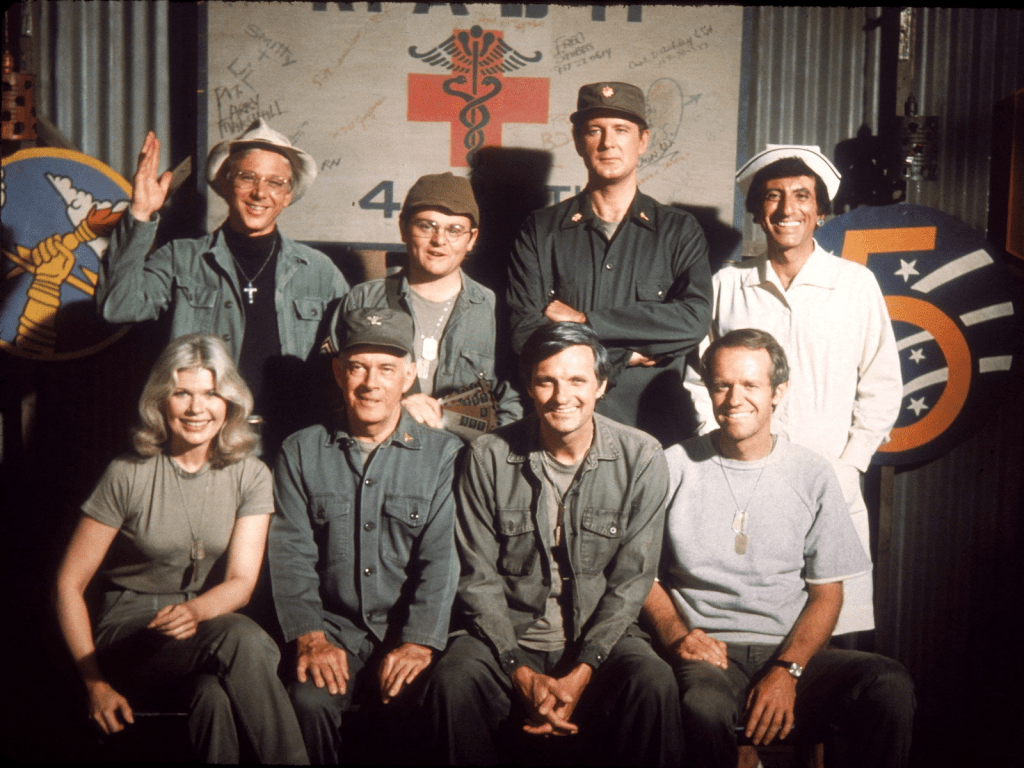
I was late to the party when it came to M.A.S.H. It was not a show we ever watched at home. Then I went to college, and suddenly it became part of the daily rhythm.
Straight after dinner, a number of us would head up to the TV room to watch that night’s episode before settling into a night of study. This was long before streaming, before everyone disappeared into their own rooms with their own screens. Television was still communal. You watched what was on, when it was on, with whoever else was there. That was part of the gift.
M.A.S.H. was not just a program, it was a shared ritual. We laughed together, reacted together, and then drifted off to our books carrying some of its humour, sadness, and absurdity with us.
By the time I started watching, M.A.S.H. had already been running for years. I arrived late, but just in time to experience its final episode, “Goodbye, Farewell and Amen,” one of the most watched television events of all time.
What drew me in was the strange mixture of comedy and grief. It was funny, but never merely funny. The humour came from people trying to stay sane in the middle of madness. The jokes did not avoid the seriousness of war; they made the seriousness bearable long enough to look at it.
Although M.A.S.H. was set during the Korean War, it aired in the long shadow of Vietnam. For those of us who grew up during that period, Vietnam was never just something happening somewhere else. It sat in the background of our childhood and adolescence. We wondered, at least for a time, whether we too might be conscripted.
So when M.A.S.H. questioned authority, exposed the absurdity of military systems, and showed the human cost of ill-advised wars, it spoke to the spirit of the age. It was not really about one war. It was about people trying to save lives in the middle of destruction.
That is what I liked about Hawkeye. He railed against military authority and the senselessness of death, but he was fiercely committed to his patients. Beneath the sarcasm was compassion. Beneath the irreverence was moral seriousness.
Having recently visited Vietnam, fifty years after the end of the war with America, I find myself wanting to sit down and watch the whole series again. I suspect I would experience the show differently now.
The first time, I watched it as a student among friends, drawn in by its humour, its characters, and its refusal to pretend that war made sense. This time, I would watch it as someone older, more aware of grief, more alert to the cost of conflict, and more grateful for stories that can hold laughter and sorrow together.
That is the strange thing about wanting to experience something again for the first time. We cannot really do it. We bring ourselves with us. But perhaps that is not such a bad thing.
The first time I watched M.A.S.H., it helped me see the absurdity of war. If I watched it again now, perhaps it would help me see even more clearly the fragile, stubborn humanity of those who try to heal what others have broken.


 The Afterword
Leave a comment