What’s something you’d love to see in the future
but know you probably won’t live to witness?
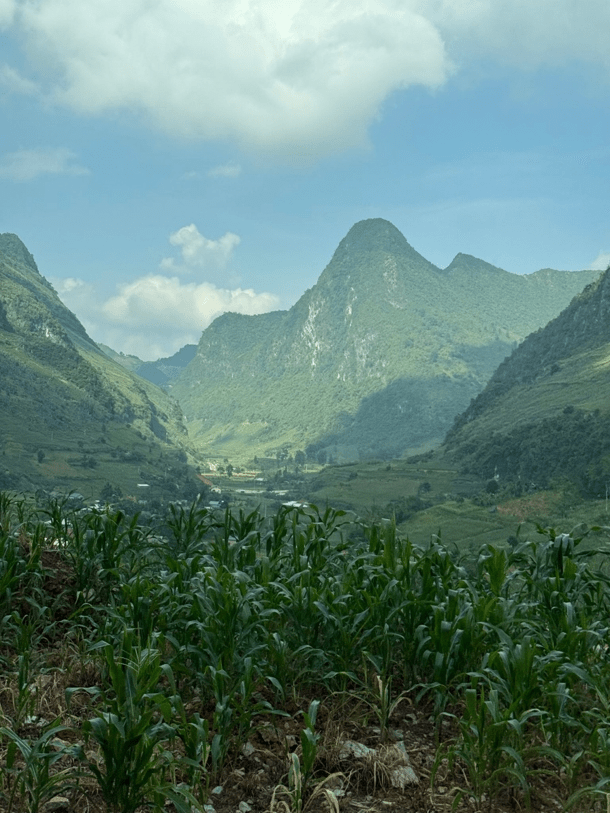
We arrived in Cao Bằng today after driving through the far northeast of Vietnam, close to the Chinese border. The landscape is astonishing. Limestone mountains rise from the valleys. Terraces cut across the hillsides. Villages sit in unlikely places. Roads wind through cliffs and passes and small pockets of cultivated land. It is beautiful country.
But after a while we noticed something strange. There were almost no birds. At first, I wondered whether I was imagining it. But the more we drove, the more obvious it became. We had seen hardly any birdlife and almost no wild animals.
This is very different from Australia. Even in our major cities, birds are everywhere. Magpies. Cockatoos. Lorikeets. Currawongs. Kookaburras. They are part of the background of ordinary life. Here, we noticed their absence.
Our first thought was Agent Orange. Given Vietnam’s history, it was hard not to wonder about it. But this part of the country was not one of the major Agent Orange target zones. The story seems to be more complicated.
These mountains have been inhabited for centuries. People have hunted, farmed, foraged, gathered firewood, and lived from the forest for a very long time. But over the last fifty to seventy years, the pressure has grown. Populations increased. Guns became more available. Wire snares became widespread. Wildlife trade expanded, especially across the Chinese border. The result is sometimes called “empty forest syndrome.” The trees remain, but the animals are gone.
That phrase has stayed with me. A forest should not be empty. It should move. It should call. It should fill you with wonder. It should contain more life than you can see. But some forests now look alive from a distance and feel strangely silent when you are inside them.
Of course, Australia has no moral high ground here. It is easy to notice absence in another country. It is harder to notice it at home. Australia is also losing species. We clear habitat. We allow invasive animals to devastate native wildlife. We watch climate change alter landscapes we love.
Human beings have not yet learned how to live with the natural world without taking too much from it. That is one of the things I would love to see in the future, but know I probably will not live to witness. I would love to see humanity learn restraint.
I would love to see forests with animals in them again. Rivers clean enough to drink from. Oceans not treated as drains. Farms, cities, energy, and economies shaped by care rather than extraction. I would love to see the earth given room to heal.
That is partly why I have been involved in bush regeneration at home. It is small work. Pulling weeds. Planting local species. Protecting what is trying to return. Learning the names of things.
It can feel almost pointless. But it is not pointless. Nature has an extraordinary capacity to heal when given a chance. Seeds wait. Roots remain. Birds return when there is food and shelter.
Driving through Cao Bằng, I found myself imagining a different future. The same limestone cliffs. The same villages. The same winding roads. But with birds in the trees again.
I will not live to see that. But I would love to know that one day this will happen.


Leave a Reply