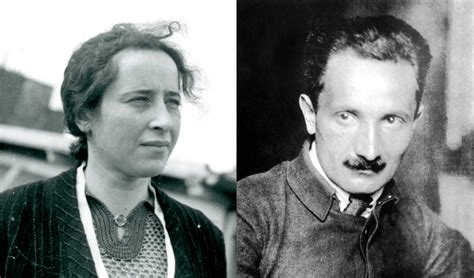
If you could have dinner with any philosopher who would it be?
Last year I read Warren Ward’s Lovers of Philosophy. I read it one chapter at a time, sometimes I couldn’t wait for the next chapter. Ward writes about philosophers and their intimate lives. Kant, Hegel, Nietzsche, Heidegger, Sartre, Foucault, Derrida. Men with large ideas. Men who did not always live well with other people. That interested me.
It is one thing to have ideas. It is another thing to live with someone. To be married. To be in love. To tell the truth. To disappoint someone and deal honestly with the hurt. Philosophy looks different there. It comes down from the shelf and has to sit at the kitchen table.
So if I could have dinner with any philosopher, I think I would choose Martin Heidegger.
I would not choose him because I liked him. I am not sure I would. I would not choose him because I thought the evening would go well. It probably would not. I imagine an awkward meal. Long pauses. Too much seriousness. Someone pouring more wine than they needed.
But I would want to ask him one thing. What were you thinking?
Heidegger wrote about authenticity. He wrote about not simply going along with the crowd. He wrote about being thrown into a particular world, at a particular time, and still having to take responsibility for your life.
Then there was his life. He was married. He had children. He had secret affairs. One was with Hannah Arendt, who was Jewish, and brilliant, and young. Germany was changing around them. The air was getting worse. People were choosing sides, or pretending not to. Heidegger joined the Nazi Party for his own career advancement. That is the part I would want to ask about.
What interests me is the gap itself. The distance between what we think and how we live. The distance between our best ideas and what we do. The distance between the person we describe ourselves to be and the person other people experience.
That is where the dinner would become uncomfortable.
I imagine sitting across from Heidegger and asking, gently at first, then perhaps less gently: did you see the contradiction? Did you feel it? Did you explain it away? Did your own philosophy help you face yourself, or did it give you better language for hiding?
And then, of course, the question would start to turn. Because Heidegger is not the only person who has lived below his own ideals. I suppose that is the danger of inviting him. The question would not stay on his side of the table. Our ideas may be sincere. They may even be beautiful. But they still have to stack up against the lived reality of our lives.
Perhaps that is why I would want dinner with Heidegger. Not to win an argument. Not to condemn him. Not even to understand him fully. I would want to see what happens when a philosophy of authenticity is seated beside a life of evasion.
And I suspect the question I would ask him is also one I need to keep asking myself.
What were you thinking?


Leave a Reply