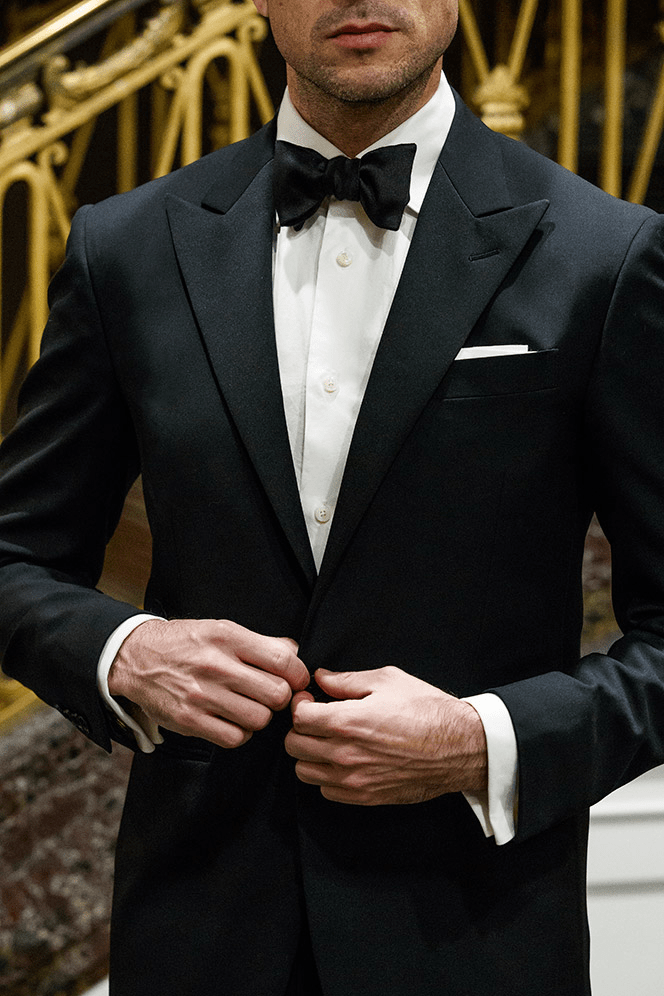
I feel very embarrassed when I look back on it. I was a broke uni student when the invitation arrived: a 21st birthday party in one of Sydney’s more affluent suburbs. The card read simply: Black Tie.
Perfect, I thought. I didn’t own one, but I knew a mate who did. A quick borrow, and I was sorted. A crisp white shirt, my best pair of trousers, and the shiny black tie.
I walked into that party thinking I had nailed the dress code. Within seconds, my heart sank. The women were in elegant gowns. The men were in tuxedos. Every man in the room wore not just a tie, but a whole black tie ensemble. It turns out “Black Tie” didn’t mean what I thought it did. It meant a tuxedo. Not just the strip of fabric.
To their credit, no one said a word. Everyone was kind, polite, and gracious. But I felt like a sore thumb in a room full of tailored sleeves. The waiter refilled my glass as if nothing was wrong, but inside I was shrinking.
And in that moment, I understood something about my own life. I grew up where the only events were in backyards, the food was always a barbecue, and the company was always family. But stepping into this one showed me just how small my horizon had been.
It wasn’t just embarrassment—it was a cultural jolt. I suddenly saw how small and familiar my world had been, and how big and varied other worlds were.
Later, when another invitation came to a Black Tie event, I was ready. I hired a tux this time. I walked in looking the part, as though I’d been doing it all my life. But the memory lingers: that first night of getting it wrong, of wearing someone else’s tie like a passport that no one would stamp.


 The Afterword
Leave a comment