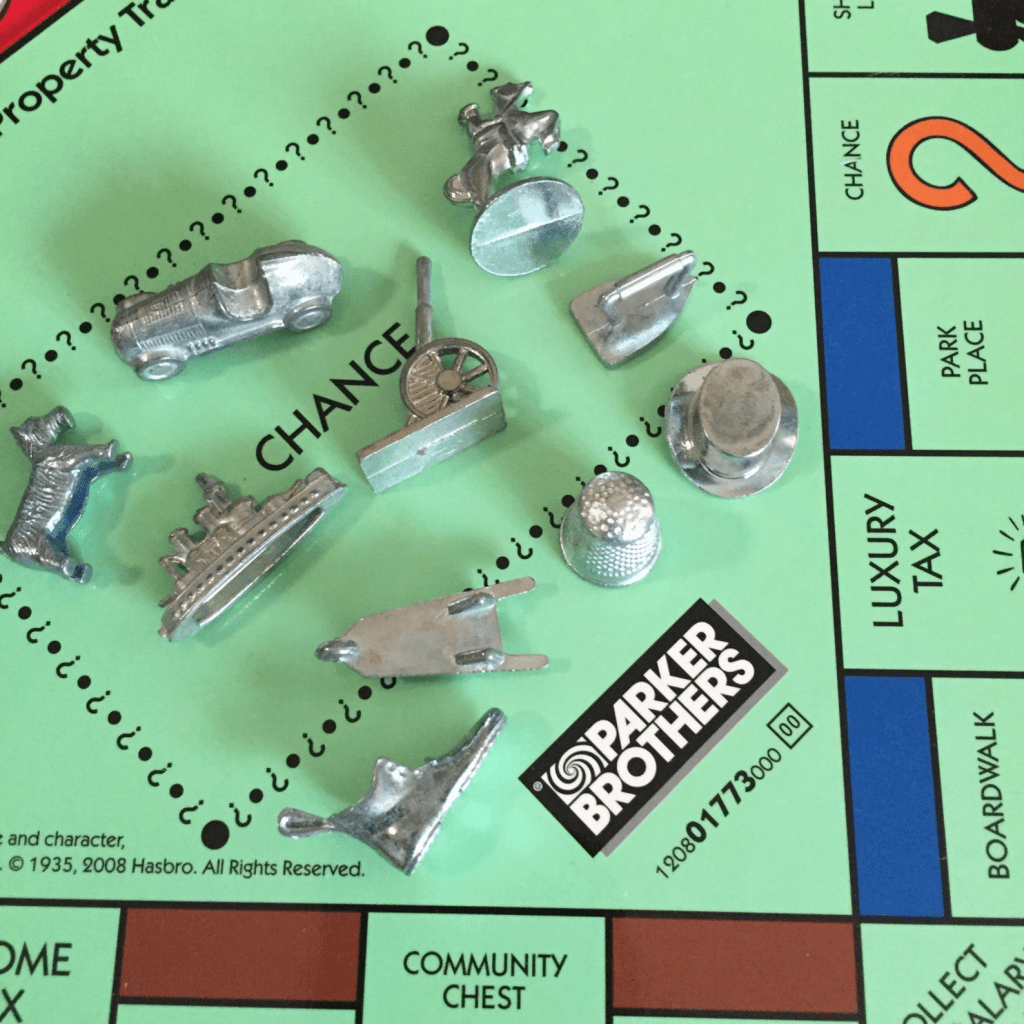
I was running a memoir writing course for a group of older adults, including my mother and father. As part of a writing exercise, we laid out a range of objects on a table—simple items intended to spark memories. Each participant was invited to choose one and use it as a prompt for free writing.
My mother selected a Monopoly piece.
After the session, she told me why it had caught her attention. As a child, she often spent time at the neighbours’ house. They had five children—noisy, close, always up to something. Sometimes they played Monopoly, sometimes they gathered around the pianola to sing. It was a happy, welcoming household.
Her own family was much smaller—just her and her younger brother. Life next door seemed full. Clothes were passed down, and pyjamas were washed during the day to be worn again at night. They didn’t have much, but the children were well fed—their father was a butcher—and there was always something going on.
She told me that as a young girl, she decided she wanted a big family of her own. Not one with new clothes or luxuries, but one full of life and togetherness. She had five children.
That conversation stayed with me. I’d never heard that story before. I hadn’t known that her vision for our family came from those childhood afternoons next door. It gave me a new way of understanding her—not just as a mother, but as someone who had made a clear and lasting choice early in life.
What changed for me was the story behind our family. Growing up in a big family shaped everything—how we shared space, how we celebrated birthdays, how loud the household could get. Until that day, I saw it as simply the way things were. But in that moment, I realised it wasn’t just circumstance. It was intention. My mother had chosen this kind of life because of what she had valued as a child: company, connection, enough to eat, and fun activities.
It also shifted how I saw my work. The writing course was meant to help others tell their stories, but it reminded me that those closest to us often carry untold memories just below the surface. A single object, a quiet room, the right question—these can open doors we didn’t know were there.
That Monopoly piece wasn’t just a writing prompt. It was a key. It opened a part of my mother’s past and, in doing so, helped me understand my own present more clearly.


 The Afterword
Leave a comment