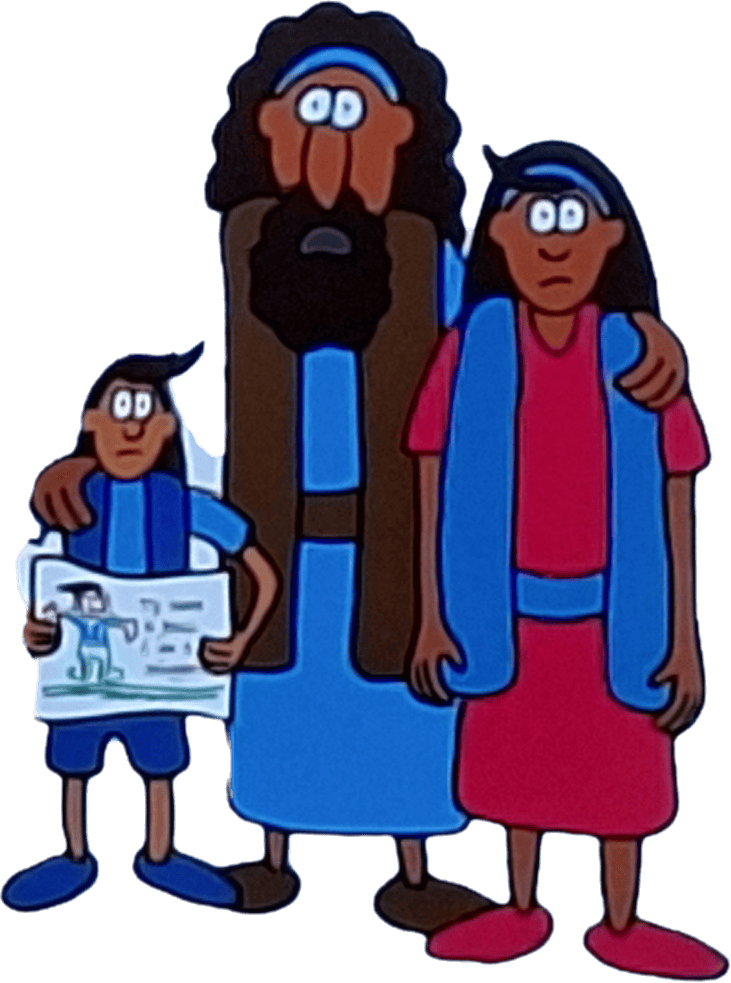
‘At The Table With Jesus’
Stories of encounters between Jesus and those considered ‘marginalised’.
We are always drawing lines.
Who belongs.
Who does not.
Who was here first.
Who speaks like us.
Prays like us.
Understands the way things are done.
And then a foreigner
walks toward Jesus.
A Roman centurion.
A man wearing
the uniform of occupation.
He comes with no claim to belonging.
Only need.
Lord,
my servant is suffering.
Jesus does not ask
where he was born,
how long he has lived here,
or whether his values are ours.
He sees suffering.
And he is willing to help.
The centurion says,
I am not worthy
to have you under my roof.
Just say the word.
He knows his own authority.
But he sees
that Jesus’ authority reaches further.
Beyond armies.
Beyond borders.
Beyond Caesar.
And Jesus marvels.
Of all the people
who should have understood,
it is the foreigner
who sees most clearly.
Many will come,
Jesus says,
from east and west,
and sit down at the table.
Perhaps the table
has always been larger
than we imagined.
Abraham was promised
that all nations would be blessed.
Israel was told,
remember,
you were foreigners once.
The psalmist sang,
May all the nations praise you.
And when Israel failed
to be the light,
Jesus became the light.
Foreigners were there
from the beginning.
Tamar.
Rahab.
Ruth.
Bathsheba.
Woven into his family story.
Magi came looking for him.
His own family fled to Egypt,
refugees
escaping a murderous king.
And now a Roman soldier
stands before him,
and Jesus says,
I have not found faith like this
in Israel.
Perhaps grace
crosses borders
more easily than we do.
We speak of scarcity.
Not enough houses.
Not enough roads.
Not enough room.
Those questions matter.
But people are never merely numbers.
Every refugee
has a home they remember.
Every migrant
has somewhere they miss.
Every international student
has someone
they wish they could sit beside
at dinner tonight.
Jesus does not begin
with what the centurion might take.
He begins
with what he needs.
And we should understand that.
For we were foreigners too.
We were outside grace,
and we were welcomed in.
So how strange
for those welcomed by mercy
to build walls around mercy.
How strange
for the church
to become a cultural enclave.
Jesus keeps looking
east and west.
Towards the newcomer.
Towards the person standing alone
when church finishes.
Towards the student
far from home.
Towards the refugee
who never wanted to leave home
in the first place.
And Matthew gives us
two Roman centurions.
One says,
Just say the word.
The other stands
beneath the cross and says,
Surely
this was the Son of God.
Foreigners
seeing what insiders missed.
Then the risen Jesus says,
All authority
has been given to me.
Therefore go
to all nations.
The question is not
whether Jesus will welcome
those who come from far away.
Matthew has already answered that.
The question is whether
we will stand beside him
and make room.
A Prayer for Refugees
“Almighty and merciful God, whose Son became a refugee and had no place to call his own; look with mercy on those who today are fleeing from danger, homeless and hungry. Bless those who work to bring them relief; inspire generosity and compassion in all our hearts; and guide the nations of the world towards that day when all will rejoice in your Kingdom of justice and of peace; through Jesus Christ our Lord. Amen.”
Original message by Lily Strachan
The Bridge Church Macquarie Park NSW
4 October 2026


Leave a comment