‘At The Table With Jesus’
Stories of encounters between Jesus and those considered ‘marginalised’.
There are cruel ways
to make a person disappear.
A child learns it early:
You’re not coming to my birthday.
You’re not my friend.
And perhaps cruellest of all—
to look straight through someone
as though they were not there.
We grow older,
but we do not always grow out of it.
We learn subtler ways
to decide who matters.
We measure wealth,
usefulness,
beauty,
strength,
status.
We notice some people
and walk past others.
Genesis 16
But God sees differently.
Hagar runs into the wilderness,
used, mistreated, discarded,
a slave woman
with nowhere left to go.
And beside a spring
God finds her.
Calls her by name.
The woman nobody wanted
discovers
that heaven has been watching.
El Roi.
The God who sees me.
And Ishmael too
God hears.
Seen.
Heard.
Named.
2 Samuel 9
Mephibosheth lives
with another kind of invisibility.
Lame in both feet.
A remnant of a defeated house.
A man expecting the knock at the door
that means death.
Instead David says,
Do not be afraid.
And then the impossible invitation:
You will always eat
at my table.
The man who thinks of himself
as a dead dog
is given a chair
among the king’s sons.
Luke 8:43-48
Then there is the woman
lost inside the crowd.
Twelve years bleeding.
Twelve years unclean.
Twelve years learning
how to disappear.
She reaches through the crush
and touches Jesus.
Who touched me?
Everyone, Peter says.
But Jesus knows
the difference between a crowd
and a person.
He stops.
Looks.
Sees her.
Daughter.
One word
restoring what twelve years
had taken away.
Not nuisance.
Not problem.
Not condition.
Daughter.
This is the heart of God
the God who sees Hagar
beside the spring,
who brings Mephibosheth
to the table,
who stops for one trembling woman
when everyone else is pushing forward.
And now
we are called the body of Christ.
His eyes
must become our eyes.
His heart
must beat in us.
For there are still people
standing at the edges
the person whose disability
makes others uncomfortable,
the family exhausted
from trying to belong,
the elderly woman
whose world has slowly emptied,
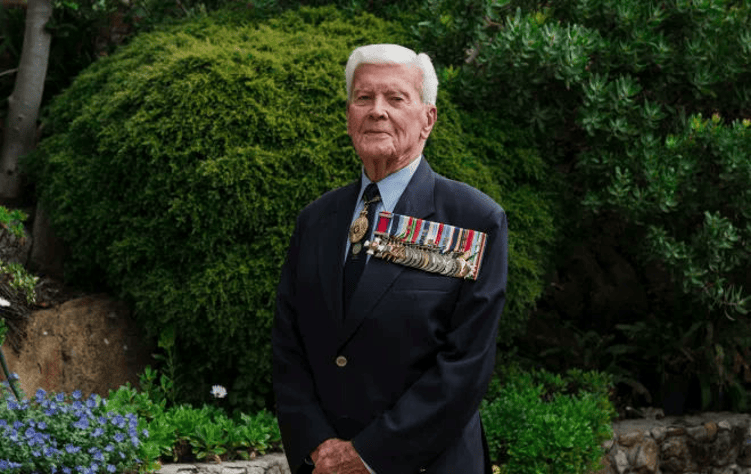
the old man
with medals, honours, stories
who says,
I haven’t spoken to anyone
for two weeks
that I haven’t paid
to speak to me.
What does Jesus see?
A life.
A name.
A story.
A person made
in the image of God.
Perhaps the question
is not simply
Do I believe
that God sees me?
Perhaps it is also:
Who have I failed to see?
Who sits beyond
the edge of my table?
Who passes through my day
unnamed,
unnoticed,
untouched?
Because Jesus sees
the invisible.
And if his heart
truly beats in us,
then sooner or later
we will see them too.
Original message by Nick Wood
The Bridge Church Macquarie Park NSW
13 September 2026
 The Afterword
Leave a comment