Obadiah
The smallest book
in the Old Testament.
A prophet
we know almost nothing about.
Only his name:
Servant of Yahweh.
He speaks after Jerusalem has fallen,
after Babylon,
after exile,
after people have lost
almost everything
except God.
And the word comes:
Edom will be judged.
Edom—
the children of Esau,
brother of Jacob.
Family.
Yet when Judah fell
they stood aside.
They watched.
They despised.
They looted.
They blocked the escape
of those fleeing for their lives.
Sometimes injustice
is not only what we do,
but what we refuse to do.
Obadiah says:
God has seen.
The wounded are not forgotten.
Human justice may fail,
but God takes up the case.
And suddenly Obadiah’s gaze
widens beyond Edom.
Beyond Babylon.
Beyond Judah.
Beyond every nation
that imagines
it will somehow emerge
from the wreckage
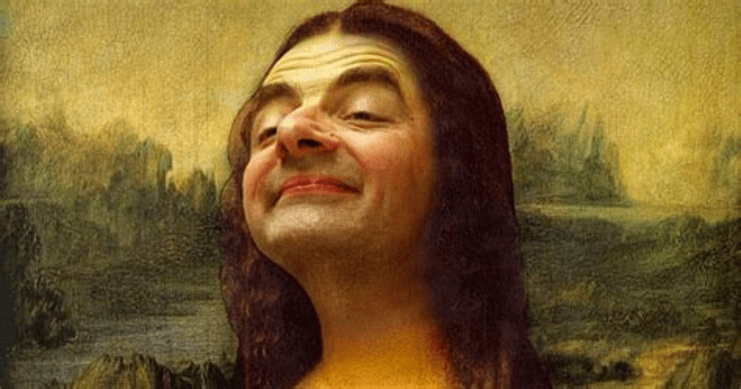
like Mr Bean—
having caused chaos
everywhere,
yet wandering away
remarkably untouched.
No.
None of us stands
outside the judgement.
What we have done
returns to us.
And who, then,
can stand?
There is only one place.
On Mount Zion
there shall be deliverance.
The place of God’s presence.
The place where God
dwells among his people.
Not because Israel
has earned its future.
Not because the wounded
are always innocent.
But because mercy
belongs to God.
The God of Abraham,
Isaac
and Jacob
is not merely
the author of equations
and the arranger of stars.
He is the God
who enters the heart,
who knows our misery
and his own infinite mercy,
who humbles,
comforts,
restores.
The God who will not abandon
his treasured children.
And Christians see
the shape of that mercy
more clearly still:
Emmanuel.
God with us.
The cup of judgement
placed into the hands of Christ,
and Christ drinking it
for us.
The Judge
entering the judgement.
The one wronged
bearing the wrong.
Mercy triumphing
over judgement.
Because God’s final purpose
is not destruction,
but restoration.
Healing for the wounded.
Freedom for those imprisoned
by their own choices.
Forgiveness
even for enemies.
A fresh beginning
for anyone willing
to receive it.
And so Obadiah ends
not with ruins,
but restoration.
Inheritance.
Homecoming.
Hope.
Perhaps the smallest book
carries one of the largest promises:
even in the darkest moment,
God has not finished.
There can still be life.
There can still be freedom.
There can still be mercy.
And perhaps our prayer becomes:
Lord,
do justice,
but also free me
from the enemies
I carry within.
As you have forgiven me,
teach me
to forgive.
Original message by Sean Tan
The Bridge Church Macquarie Park NSW
9 August 2026


Leave a comment