If you could have dinner with any fictional character who would it be?
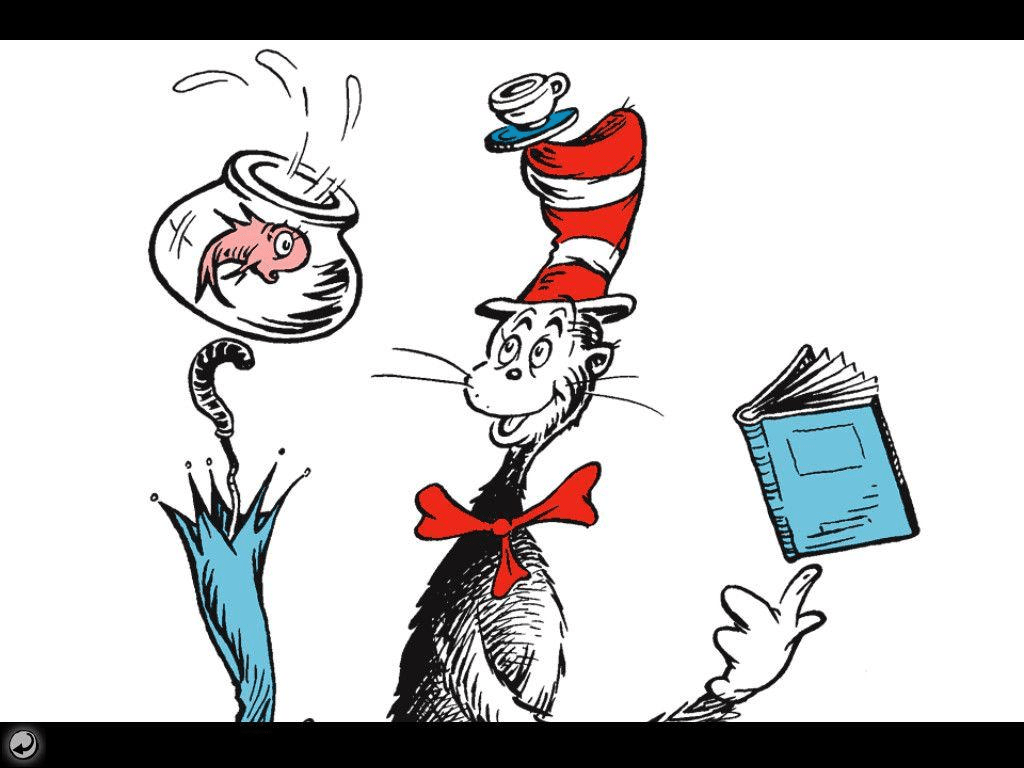
If I could have lunch with any fictional character, I would choose the Cat in the Hat.
He would arrive without being invited. “You were thinking of me,” he would say, stepping through the door with his striped hat brushing the frame. “The invitation was strongly implied.”
He would look at the dining table and shake his head. “Chairs,” he would say, “are an unimaginative way to sit.”
He would then produce several large red balls, and we would attempt to eat while balancing on them. The Cat, of course, would appear perfectly at ease. I would spend most of the meal trying not to fall.
Dessert would arrive first. “Lunch should have a better beginning,” the Cat would explain.
A towering pear and bear éclair, decorated with cherries, berries and something he called merry cream. I would hesitate over the bear, but the Cat would assure me that it was purely decorative.
For the main course, he would produce ham, jam and yam, baked beneath a crust of clam. It would taste far better than it had any right to.
Finally, the canapés would arrive: beans with greens and tiny sardines. Each mouthful would have been chosen not because the flavours belonged together, but because the words did.
The Cat would insist that rhyme was an overlooked culinary principle.
As we ate, he would fold the napkins into small birds. They would flutter around the room, carrying crumbs in their beaks and occasionally landing on my head.
By then, the tablecloth would be crooked, the plates would be scattered, and a trail of merry cream would stretch from the kitchen to the ceiling.
“Mess,” the Cat would say, “is simply creativity before it has been organised.”
There may be something in that. The Cat in the Hat himself emerged from limitation. Dr Seuss was challenged to write an engaging children’s book using a restricted vocabulary. From two simple rhyming words, cat and hat, he created one of the most memorable characters in children’s literature.
Perhaps creativity does not always need more freedom, more resources or more choices. Sometimes it needs a peculiar restriction. A meal must be served backwards. Ingredients must rhyme. Chairs must be abandoned for red balls. A limitation can become an invitation to play.


Leave a Reply