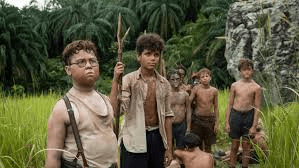
What is the first book you ever finished and still remember to this day?
I was sixteen when I read Lord of the Flies. It is the first book I remember finishing. It was set reading at school. Not the first book I started. The first one I remember getting to the end of.
What I remember most is the feeling of it. It was graphic. Unsettling. More brutal than I expected a book about boys on an island to be. The conch. The fire. Piggy’s glasses. The fear of the beast. Simon in the dark. Ralph running for his life.
I was a boy reading about boys. That may have been part of its force. The violence was not carried out by monsters. It emerged among children who began with rules, names, assemblies, and the remains of schoolboy order. They knew what civilisation sounded like. And still the island changed them. Or perhaps it revealed them.
That was the disturbing thought the book left behind. The beast was not only out there in the jungle. It was in the boys themselves. In their fear. In their need to belong. In their willingness to follow strength when goodness seemed too weak.
I doubt I could have said all that at sixteen. At sixteen, I think I just felt the shock of it. Some books are remembered because they delighted us. Some because they opened a door. This one stayed because it disturbed something.
Decades later, it still sits somewhere in the back of my mind. I think of it when I see how quickly groups form around fear. When people stop listening to one another. When public life becomes tribal. When the question is no longer, “What is true?” but “Whose side are you on?” When rumours become stronger than facts, and cruelty is excused because it has momentum.
The book feels painfully current Because Golding understood something that still matters: civilisation is thinner than we like to think. Decency is not automatic. Shared life depends on fragile things — speech, trust, restraint, responsibility. The conch only works while people agree to honour it. Every community has its conches. Processes. Institutions. Customs. Ways of allowing the quieter voice to be heard. Ways of stopping the strong from simply taking over. But those things are not magic. They can be ignored. They can be mocked. They can be smashed.
The ending still troubles me. Ralph is rescued by a naval officer. The adult arrives. The boys are saved. Order returns. Except it does not, really. The officer comes from a world at war. The island is not separate from the adult world. It is a small version of it.
This was a book that was hard to dismiss. I was sixteen when I finished it. I closed the book, but I did not quite leave it behind. A reminder that fear can become a leader. A reminder that crowds can make people less than themselves. A reminder that the beast is never only somewhere else. And perhaps also a reminder to tend the fragile things before they break.


Leave a Reply