What is a classic book that you think is overrated?
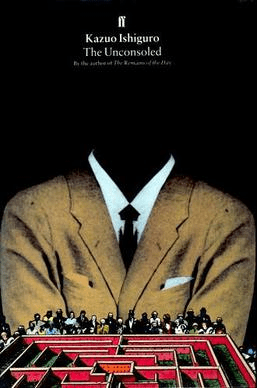
I read Kazuo Ishiguro’s The Unconsoled in 1995 because, at the time, it seemed to be the book everyone was reading. It was described as a modern classic. It had literary ambition, critical attention, dream logic, and enough bafflement to make you wonder whether the problem was the book or you.
For me, the problem was the book.
Reading it felt like listening to someone else’s dream for 535 pages. Call me callous, impatient, unsophisticated, whatever you like, but I do not enjoy listening to people’s dreams. I can cope with the fifteen-second version. But when a dream goes on and on, when rooms lead to corridors, corridors lead to forgotten obligations, I begin to struggle.
I can see why people admire the book. It captures something about anxiety, obligation, and the dislocation of modern life. There are days that feel a little like The Unconsoled: one unresolved conversation leading to another, people asking for things without quite naming them, meetings producing more meetings, and the slow suspicion that you have forgotten something important but no one will tell you what it is.
But admiration is not the same as love.
The fundamental problem is that I am a realist. Not because I need fiction to be flat or predictable. I do not mind strangeness. I simply prefer strangeness discovered within ordinary life.
I love writers who can take a family meal, a bus ride, a half-finished conversation, a marriage, a workplace, a kitchen table, or someone lingering in a doorway, and show that these things are never merely ordinary. They know that people often reveal themselves sideways. A joke can carry grief. A casual remark can hide loneliness. A small kindness can change the weight of a day.
Everyday life is full of oddity if you slow down enough to notice it. People say one thing and mean another. They arrive with a simple question and leave having revealed something large. They develop rituals no one planned: the same seat at dinner, the same walk at the same time, the same phrase used to cover embarrassment. Families and workplaces are full of these tiny patterns. They look ordinary from a distance, but up close they are strange, funny, tender, and sometimes heartbreaking.
That is the kind of fiction I trust. Not fiction that escapes the ordinary, but fiction that stays with it long enough for its depth to appear. It does not need to bend reality out of shape. It only needs to pay attention. The ordinary world already contains enough mystery: love, resentment, loyalty, boredom, fear, habit, regret, grace. All of it shows up in the smallest exchanges. Very small things are often larger than the big things.
This is what I want from fiction. Not necessarily spectacle. Not necessarily cleverness. Not necessarily 535 pages of dream logic. I want a writer who can show me the depth of the ordinary: the mystery of a family meal, the ache inside a casual remark, the courage hidden in routine, the grief beneath politeness, the grace inside a small act of attention.
The Unconsoled tries to make the world strange by bending reality.
The writers I love make the world strange by looking at it closely.
I know which one I trust.


 The Afterword
Leave a comment