What’s the most interesting local custom you’ve encountered?
The most interesting local custom I have encountered is not interesting because it is quaint. It is interesting because it asks something of us.
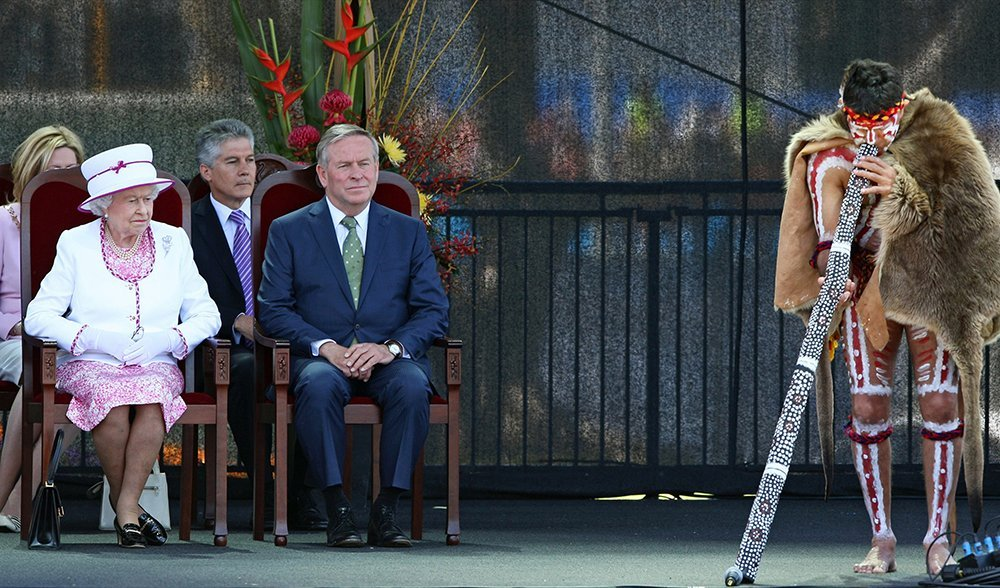
I am thinking of Welcome to Country or Acknowledgement of Country ceremonies. They are not the same thing. A Welcome to Country is a formal cultural ceremony performed by Traditional Owners of the land. An Acknowledgement of Country is a statement of respect that anyone can give.
Both have become familiar in Australian public life. They have also become contentious.
The recent booing during Anzac Day ceremonies brought this into sharp focus. I know the elder who gave the ceremony in Sydney. I know him to be a person of integrity, grace, humour, and honesty. So, for me, the response was not merely political. It was an insult to him as a person, to his people, to our country, and to the seriousness of the occasion.
It is easy to boo a symbol. It is harder to look at the person standing there.
One reason I value this custom is that it begins with respect. It says: we are not the first people here. This place has memory. We stand on land that has been known, loved, named, sung, walked, and cared for long before us. Respect is not a distraction.
I have written before about the Brewarrina fish traps, one of the great meeting places in eastern Australia. Many Aboriginal nations gathered there for ceremony, trade, diplomacy, and social connection. These gatherings had protocols. People did not simply walk into another group’s Country and act as though they belonged there. Permission was sought. Custodians welcomed them. Rules of safe passage were observed. https://theafterword.blog/2026/01/13/a-new-kind-of-freedom/
That is a serious way of understanding land. It is not only property. It is relationship. Responsibility. Belonging. Much of Western culture asks, “Who owns this land?” Indigenous culture asks a deeper question: “How do we belong rightly to this Country?”
I also learn from the people who offer the welcome. I learn something of their story, humour, culture, and the challenges they face. The elders I have heard are often generous and disarming. They carry painful history without always speaking bitterly. They often speak with grace when grace has not always been shown to them.
I understand why some people struggle with these ceremonies. Sometimes an Acknowledgement of Country is done thoughtlessly. Sometimes it sounds like institutional virtue signalling. When words are used without attention, they lose weight.
Others feel interrupted. They want to get on with the meeting, lecture, ceremony, match, or day. But respect is not an interruption.
Some hear these ceremonies through guilt and defensiveness. They feel accused for things they did not personally do. Others feel culturally unsettled, economically pressed, or unsure of their own place in a changing country.
Some people are offended because they feel they are being welcomed to their own country. They were born here. Their families may have been here for generations. This is home. So the words can sound as though someone is telling them they do not belong.
I understand that. No one wants to feel like a guest in the only home they have known. But I do not hear Welcome to Country as saying, “You do not belong here.” I hear it saying, “You are not the only ones who belong here.” Our belonging sits alongside an older belonging, one that was ignored, damaged, and often denied.
Which brings me to the final reason I value this custom. It asks what kind of people we want to be. Kate Grenville, in Unsettled, asks what we do with the knowledge that non-Indigenous Australians are beneficiaries of a violent past. We cannot change what happened. We also cannot pretend it has no claim on us. The question is no longer only, “What happened?” It is, “What do we do now that we know?”
The old human story is familiar. When two groups want the same land, security, and future, fear rises. Power organises itself. One group dominates. Another is pushed aside. Later generations inherit the consequences and argue over what we do with what we know. The world is on edge for exactly this reason.
Perhaps Welcome to Country matters because it offers a small rehearsal of another way. Not conquest. Not denial. Not resentment. Not erasure. Welcome.
A person stands before us and says, in effect: this is Country; it has a story; my people have carried that story; you are here now; you are welcome; come with respect.
That is not a perfect solution. It does not undo the past or settle every argument.
But at its best, it is a moment of grace. And like all grace, it can be refused. Or received.


 The Afterword
Leave a comment