He goes before us
not hurried,
not turning aside,
not shielding himself
from what he knows is coming.
We follow behind him
into the city of palms,
into the trembling air,
into the week that gathers
like stormlight at the edge of the sky.
He is called king,
but not the kind
who comes with horses,
with iron,
with banners snapping above the will of men.
He comes lowly.
He comes riding a borrowed creature
close to the ground,
as though peace itself
must arrive without spectacle.
Around him
the old machinery of violence
is already beginning to turn.
Plots are whispered.
Fear hardens.
Hands move toward swords.
Night prepares its verdict.
Yet he remains himself.
Meek,
steadfast,
undefended.
He does not answer force with force.
He does not gather an army.
He does not call fire from heaven.
He does not teach his friends
how to wound.
He walks on
with a heart already breaking
for the world he loves.
This is his passion:
not anger,
not conquest,
but the fierce tenderness
that will not let humanity go.
He enters Jerusalem
as the King of Peace,
and peace in his mouth
is not a slogan
or a pause between battles.
Peace is the tearing down
of every wall.
Peace is the opening
of the Father’s arms.
Peace is the end
of all that keeps us
strange to God
and strangers to one another.
He is our peace.
And still
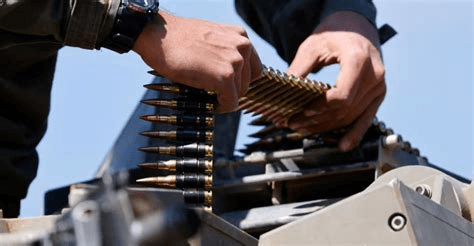
we reach for weapons.
Still we imagine
that love needs steel,
that truth needs domination,
that fear can save us.
But he says,
Put it back.
Put the sword back.
Put the rage back.
Put the old dream of triumph back
into its sheath.
For his kingdom
will not be built
by the wound one enemy gives another.
He walks further in,
into betrayal,
into accusation,
into the fists and clubs of men
who do not recognise
the gentleness of God.
Burdened with our griefs,
pierced by our sin,
he does not open his mouth.
Like a lamb,
silent before the shearers.
Like mercy
refusing to become cruelty
even to save itself.
This is our God:
not the god of war cries,
not the chaplain of empires,
not the blessing laid cheaply
on bloodied hands.
He cannot be used
to justify the ruin of cities,
the terror of children,
the pride of nations,
the old lie
that killing can heal us.
He is the one
who lets himself be broken
rather than break the world.
Teach us to trust
that death will not rule forever,
that the long injustice of nations
has been numbered,
that the fire of war
will one day dim into evening,
that the suffering of the poor
will not have the final word.
So we follow him now.
Behind the donkey.
Behind the silence.
Behind the wounded love of God.
Into Jerusalem.
Into the shadow.
Into the peace
the world does not know how to make
and cannot finally destroy.
Original message by Pope Leo XIV
St Peter’s Square
29 March 2026
 The Afterword
Leave a comment