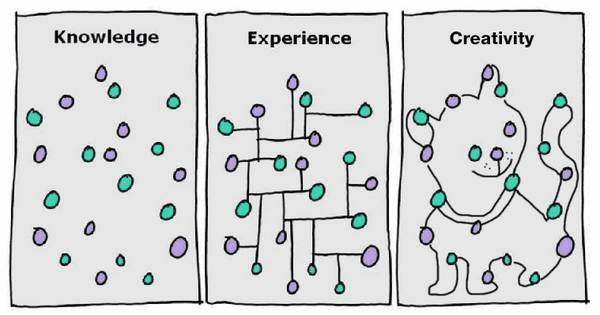
How are you creative?
Some people are creative because they can hear music. It forms in their mind and flows almost unimpeded onto the page, then to the keyboard.
Some people are creative because they can see. Images assemble themselves in the mind’s eye and find their way to canvas, screen, or stone.
Others are creative in their bodies. They feel rhythm or emotion physically and give it shape through movement.
My creativity works differently. I see connections.
I notice how two dissimilar things belong together. This goes with that. I don’t always know why at first, only that they do. When the connection reveals itself, something opens. There is a sense of rightness to it — as though two notes, struck together, unexpectedly harmonise.
Most often, that harmony finds expression in words. One word sparks another, then another, until a line begins to sing. But sometimes it takes form in initiatives: a project that reframes how things are usually done, or a course that draws together ideas that were never meant to remain separate.
My doctoral work grew this way, from a playful connection between what a preacher does in the pulpit and what a writer does on the page. Both, I realised, invite people into a world, hold them there for a while, and allow something true to be discovered rather than explained.
The same instinct shaped a memoir-writing course for people who never thought of themselves as writers. The task was not to teach technique first, but to help them discover their voice — to trust that what they carried was worth saying, and that it could flow freely for family and close friends.
I have written academic courses the same way: creating space, loosening the grip of self-censorship, allowing expression to emerge rather than be forced.
At heart, my creativity is playful. It involves sitting with things, turning them over, letting them rest. Then, suddenly, I see it — how this belongs with that — and once I do, the movement begins. I don’t always make something new. Often, I simply let what already exists find its partner — and listen for the moment when it starts to sing.


Leave a Reply