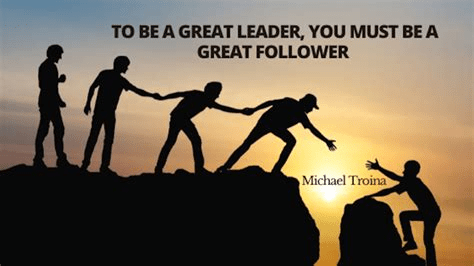
Ask me whether I’m a leader or a follower, and I’ll tell you I am both. Not because I’m hedging my bets, but because one role doesn’t make sense without the other. Leadership without followership is a performance without a stage. And followership without the capacity to lead is submission, not service.
I serve as the principal of a university residential college — a role that carries weight. Three hundred students from thirty-seven countries, a gifted staff team, and a culture I’ve inherited and am now entrusted to shape. Leadership here is not a spotlight; it’s a long-haul stewardship. It means sleepless nights, strategic decisions, and small conversations that slowly till the soil of someone’s growth. It means protecting people’s safety and cultivating their character — giving them room to take initiative and knowing when to step in. It means tending to culture like a gardener — pulling weeds, nurturing the good, letting life breathe.
But leadership isn’t dominance. It’s not having the best ideas or being the loudest voice in the room. The healthiest organisations I’ve seen are the ones where no one clutches power too tightly. Where trust flows, and people are given space to rise. My leadership style is consultative, collaborative, shaped by the belief that the wisdom of the group will often exceed the brilliance of the individual. Sometimes I lead from the front. But often, I lead by listening — by holding the space open long enough for something good to emerge.
And so I follow too. I submit myself to the strengths and insights of others. I let people sharpen my thinking, reframe my assumptions, challenge my blind spots. I try to follow in a way that makes leadership safe for others — not with passive compliance, but with purposeful partnership. A good follower orbits not around the leader, but with them — both circling a deeper purpose.
I’ve seen what happens when people are put in leadership without learning how to follow — it curdles into control, into fear, into brittle egos. But those who have followed well — who have learned to serve with integrity and passion — often lead with humility, strength, and grace.
Leadership and followership, then, are not roles I step in and out of. They are postures of the same heart: to love people well, to serve a shared mission, and to stay true to the trust we’ve been given.
So am I a leader or a follower? Yes. Both. Always both.
The Role of a Leader
Not the loudest voice
nor the first to speak—
a leader listens
for the quiet thing beneath the noise.
They walk ahead when the path is unclear,
but step aside
when others find their stride.
They do not hoard the light
but learn how to reflect it.
A leader does not build towers,
but tends to roots—
protecting what grows,
pruning what chokes,
trusting that health
often blooms
in unseen places.
They carry weight
without needing to be heavy,
hold power
without gripping it tight.
They are the calm
in crisis,
the question
in certainty,
the yes
that frees others to try.
Their strength is not
in knowing everything
but in knowing
they don’t.
A leader remembers
they too have followed,
and still must.
They orbit purpose,
not applause,
and call others
toward the same.


 The Afterword
Leave a reply to Peter Cancel reply