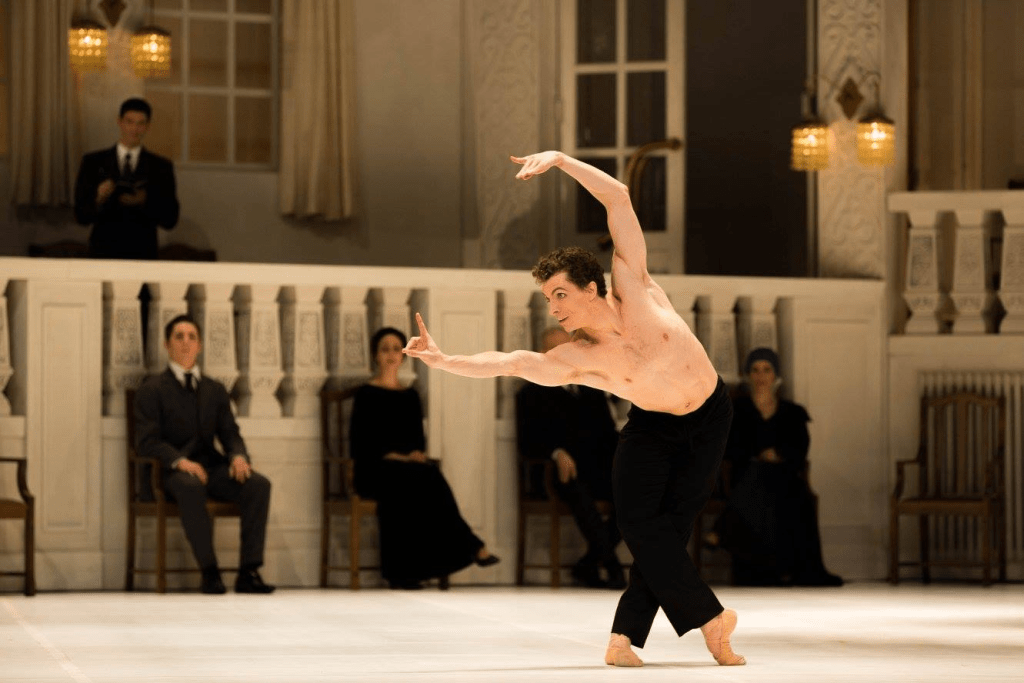
The last live performance I attended was Nijinsky by The Australian Ballet. It was also, perhaps surprisingly, the first ballet I’ve ever seen. I’ve always appreciated the performing arts—music, theatre, poetry—but ballet had remained at a distance. I wasn’t sure what to expect. I certainly didn’t expect it to stay with me the way it has.
Nijinsky is no ordinary ballet. It tells the story of Vaslav Nijinsky—an extraordinary dancer and choreographer whose career dazzled early 20th-century Europe, and whose life unravelled under the weight of schizophrenia. His final public performance, held not in a grand theatre but in a Swiss hotel in 1919, was a spontaneous, emotional improvisation—his farewell to the world of dance before he vanished into years of psychiatric care.
This performance, choreographed by John Neumeier, wasn’t just a biography. It was a psychological immersion. It moved back and forth through Nijinsky’s memories—his childhood, his fame, his family, his loves—and blurred the lines between performance and personal collapse. The narrative was vivid, unsettling, and emotionally demanding. Some people didn’t return after intermission. I understand why. But I stayed.
There was something raw and urgent in the way the dancers moved—especially the male leads, who inhabited Nijinsky’s unorthodox style with a kind of volatile grace. The sets were lush, the costumes glamorous, and the scenes evocative of a bygone world. But the emotional weight of the piece eclipsed the aesthetic beauty. It wasn’t comfortable. It wasn’t meant to be.
What struck me most was how Nijinsky reminded me that live performance isn’t always about escapism. Sometimes it’s about confrontation. Sometimes it’s about holding space for complexity—for genius intertwined with madness, for beauty born of suffering, for art that doesn’t offer tidy resolutions.
I’m glad I went. It opened a new window for me—not just into ballet, but into the power of performance to tell stories we might otherwise look away from. And in doing so, it stayed with me long after the curtain fell.
Not what I expected—
not grace and ease,
but fragments,
fracture,
a man unraveling in motion.
Velvet curtains,
gold-lit Paris,
and underneath—
the ache of brilliance
too bright to bear.
Some did not return
after intermission.
But I stayed,
drawn to the beauty
that dared to break.
 The Afterword
Leave a comment