She was raised
to think often about righteousness.
Her father was a Pharisee.
She learned to do what was right,
and she did it well.
So when the rabbi said,
Be careful,
she was startled.
What danger could there be
in righteousness?
Then he named it:
doing holy things
to be seen.
Giving to the poor—
the law had always made room
at the edge of the field,
grapes left on the vine,
food for the poor,
the stranger,
the one with empty hands.
Because God is generous.
Because God rescues.
Because those brought out of Egypt
must learn to live
with open hands.
So give, Jesus says,
but do not make mercy
into a performance.
Let kindness be quiet.
Let generosity forget your name.
Prayer—
the Amidah was holy,
morning, afternoon, evening,
the prayers of Israel
marking the hours,
turning ordinary time
toward God.
But even holy words
can be bent
toward the self.
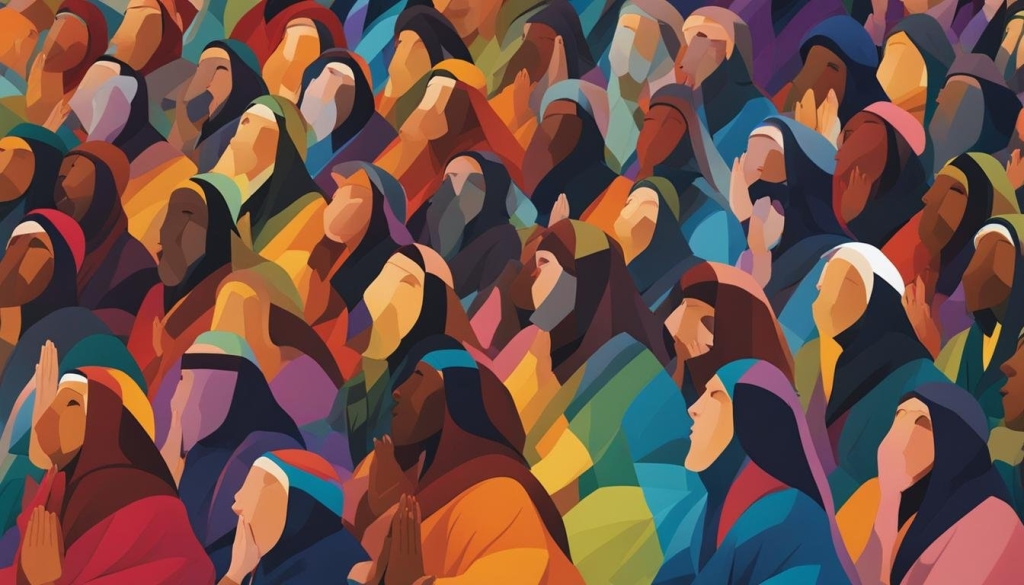
Go into your room.
Close the door,
not where the crowd was thickest,
not where devotion could be noticed,
admired,
remembered.
Your Father sees.
Your Father knows.
Your Father is already there.
So pray simply:
for bread,
for forgiveness,
for grace to forgive,
for help against evil.
Not words for the crowd,
but words for God.
Fasting—
not a public face of sorrow,
not devotion turned into display.
Wash your face.
Look ordinary.
Let even your hunger for God
be honest,
hidden,
true.
And through it all
the word returns:
Father.
Father.
Father.
Not a God to impress,
but a Father to know.
Perhaps the reward
is not wages,
but nearness.
So now the question lingers
beneath every good thing:
Who is this for?
Because we are always
satisfying someone.
The crowd.
The self.
Or God.
And Jesus calls us back
to the secret place,
where gifts are given,
prayers are whispered,
hunger is hidden,
and righteousness
is no longer about being seen,
but about loving the Father
when no one sees.
Original message by Sam Begg, The Bridge Church Macquarie Park NSW
8 March 2026
 The Afterword
Leave a comment