When people speak of their favourite childhood books, there’s often a glow—a warm memory of being read to at night, of turning pages beneath a doona with a torch, of library visits and beloved stories that shaped the way they saw the world.
My childhood wasn’t like that.
Books didn’t feature heavily in our home. I don’t recall anyone reading to me. There were no shelves lined with picture books, no treasured copies worn at the corners. I didn’t grow up nestled into stories. I grew up outside, in a backyard or on a makeshift field, kicking a ball through a bicycle tyre hung from the clothesline.
That was the kind of literacy I knew: reading the wind, reading the bounce, refining technique by repetition. Sport wasn’t just play—it was passion, aspiration, and one of the few things that brought parental attention. We trained ourselves in it, not with coaches but with each other, fuelled by dreams of heroes who wore boots instead of capes.
In our household—and in much of Australia—sport was the sanctioned story of boyhood. It was what you were praised for. It was where you proved yourself. There was an honour in sweating, in pushing your body, in never giving up. It shaped our identity, our weekends, our friendships. It was the one arena in which effort was reliably rewarded and heroes were recognisable. To play well was to matter.
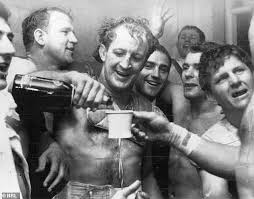
If I had a favourite book, it was Johnny Raper’s Book of Rugby League. I borrowed it on repeat from the school library. Not because of the prose—there was nothing lyrical about it—but because Johnny Raper was a hero. He made sense of the world I wanted to belong to. That book didn’t ask me to imagine a new reality—it affirmed the one I was already living.
The other sanctioned narrative, though less openly celebrated, was war.
I was born a decade after the end of World War II. The air still hummed with its aftershocks. Its stories were in the silences of our fathers, the medals in our neighbours’ drawers, the black-and-white television shows we consumed: Combat, The Rat Patrol, The Sullivans. Our play was full of war—stick rifles, trench dugouts in the dirt, whispered missions. We fought invisible enemies with real intensity.
Looking back, I realise we weren’t just playing. We were rehearsing. War was also part of the national script, especially for boys. It was woven into the idea of masculinity. You might grow up to be a footy legend, but you also might have to serve your country. Heroism came in two uniforms: the jersey and the khaki.
The Vietnam War was real by the time I was in my teens. I remember the conscription lottery—birthdates broadcast on the evening news. There was a fear, unspoken but heavy, that we might be called up. And yet, that fear was laced with expectation. If your number was drawn, you went. You didn’t question it too much. That, too, was part of the script.
The books I encountered as a child reflected these narratives. Biggles was another name I borrowed from the school library. Flying ace. Wartime hero. Decades later, I’d realise how problematic those stories were—casual racism, outdated views—but at the time, they fit the pattern. They were extensions of the world we knew, not departures from it.
So when someone asks about my favourite childhood book, I hesitate. Not because I didn’t have one, but because I didn’t have it in the way they mean. My favourites weren’t literary masterpieces—they were cultural companions. They met me where I was: in backyards, in bootcamp fantasies, in the glow of late-afternoon sport and the looming shadow of war.
In hindsight, I can see the gap—the absence of imaginative alternatives, the lack of gentle, expansive stories that might have offered something different. But I also see how deeply shaped we were by the sanctioned narratives of our time. Sport and war. Heroism and endurance. Victory and sacrifice.
And maybe that’s what a favourite book really is—not just the best-written, but the one that named your world and made you feel seen in it.


 The Afterword
Leave a comment