Some books entertain. Others inform. And then there are the ones that rearrange the furniture of your mind. These three books didn’t just give me new ideas; they unsettled me in the best possible way—disrupting old assumptions and making space for a truer way to see the world and live within it.
1. The Grapes of Wrath — John Steinbeck
What stays with me from Steinbeck’s masterpiece isn’t just the story, but the piercing contrast he draws between the values of the migrant workers and the industrialists. For the former, security was found in community. For the latter, in money. It was the first time I’d seen such a clear, almost aching portrait of people who had nothing—except each other.
That image reached inside me. It forced the question: Where do I find my security? Not theoretically, but practically. Where do I run when things fall apart?
The answer I landed on wasn’t achievement or money. It was relationships. It was God. That’s the lesson I took—and it’s an eternal one, as relevant now as it was in the Dust Bowl years Steinbeck wrote about. In a world that still prizes the bottom line, I want to build a life that prizes people.
2. Texts Under Negotiation — Walter Brueggemann
When postmodernism was making its noisy entrance into theology and culture, this book helped me listen rather than panic. Brueggemann taught me to read the Bible as a Jewish text—which is to say, with reverence for its wildness. He gave permission to notice that Scripture is sometimes contradictory, irrational, paradoxical, ironic, and even scandalous.
That was a liberation. Up to then, I’d been taught to read the Bible like a biologist with a butterfly pinned under glass: catalogue the parts, label the features, present tidy answers. But Brueggemann invited me into something deeper and stranger. I began to read with wonder instead of control. Preaching became more playful, more honest, more human. I stopped trying to make every passage fit. Instead, I let the text breathe—and found it breathed back.
3. The Biggest Estate on Earth — Bill Gammage
This book changed how I see the ground I walk on—literally. Gammage’s meticulous research dismantled the settler myth of Australia as untouched wilderness. What he uncovered instead was a vast, deliberate, continent-wide system of Aboriginal land care: fire-based, ecologically intimate, and stunningly effective.
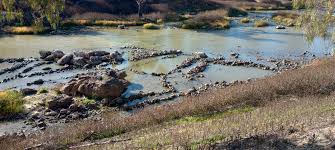
That discovery became even more tangible when I visited the Brewarrina fish traps on the Barwon River. The sophistication of these ancient engineering marvels—designed to sustainably trap fish year-round—was astounding. They are among the oldest surviving human-made structures in the world. And yet, early settlers, in their haste to move grain more efficiently, blew parts of the traps up so boats could pass through.
The contrast between the beauty of Indigenous custodianship and the brutal, money-hungry interventions of Western colonisation was confronting. It still is. Gammage helped me see that First Nations knowledge is not just history—it’s wisdom we urgently need.
Each of these books gave me a different kind of gift—unsettling, expanding, rooting me deeper in things that matter. They challenged me to find security in people, not possessions. To embrace mystery, not manage it. To honour wisdom, not overwrite it. I’m more whole for having read them. And more awake.


 The Afterword
Leave a comment