I wouldn’t say I’m religious—at least not in the way people usually mean it. If someone asks, “Do you practice religion?” my answer is yes and no.
Yes, because I’m a Christian.
No, because I’m not drawn to religious routine or ceremony for its own sake. I go to church every week—not because I’m especially fond of liturgy or love singing hymns, but because I’m convinced of the reality of God.
That conviction shapes everything.
I didn’t grow up in church. Faith wasn’t the language of my upbringing. Ours was a moral household—stable, loving, decent—but secular. The good life was defined by having a nice family, a good job, a roof over your head. And I was fortunate: I had all of that. Middle-class. Educated. Safe.
But then, in my teens, I found myself drawn to a group of friends who were Christian. There was something in them I couldn’t name—a different kind of depth. They lived with a richer sense of purpose. There was a bond between them that I couldn’t explain but couldn’t ignore. It was… different. And I started to wonder if maybe there was something true at the heart of it.
I knew it had to be one or the other. If it was true, it was worth everything. If it wasn’t, it should be dismissed.
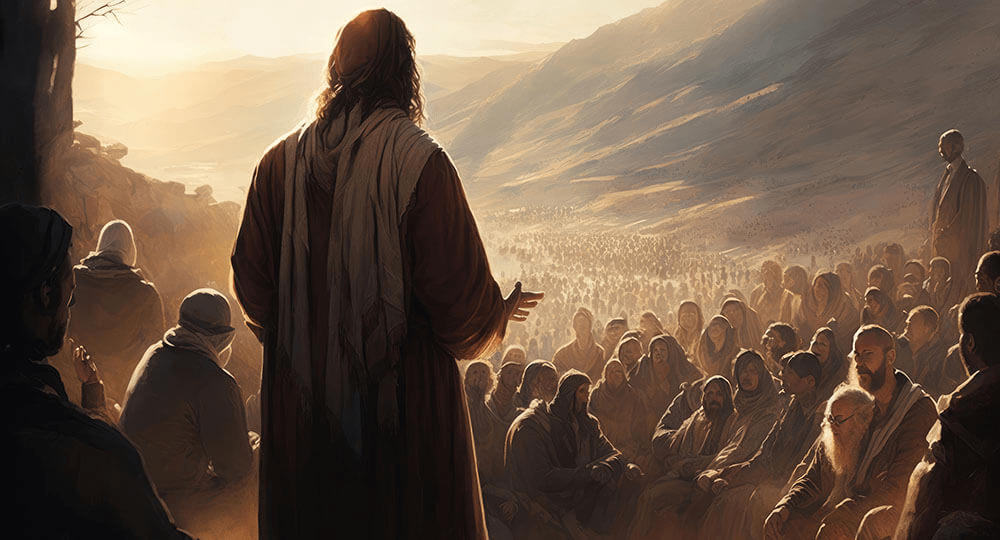
So I read Matthew’s Gospel. I talked with friends. I didn’t understand it all, but I found Jesus compelling. That word’s important to me—compelling. Not just interesting. Not just wise. Compelling in the way the Sermon on the Mount turned everything upside down. It offered a vision of reality that was God-centred, other-centred, honest about the human heart—honest about my heart—and somehow still full of hope.
When someone asked me if I wanted to follow Christ, I said yes. I asked for forgiveness. I didn’t have all the answers then—I still don’t—but that decision became the turning point of my life.
Since then, I’ve spent forty years in ministry—twenty in the church, twenty in the university sector. Both are ways of serving. Of helping people grow. Of praying with them, walking alongside them, trying to be a presence of grace in good times and bad.
But I want to be clear: this isn’t idealism. It’s not a sugar-coated version of life. I’m not a literalis, but I find the Bible trustworthy. Not because I understand every verse, but because again and again, it tells the truth about life. It knows things I wouldn’t have seen on my own.
And yes—religious groups have behaved abysmally. History tells that story. But so have secularists. And so have I. I look back on the contours of my own life and see moments of deep regret. You find both the best and worst in honest accounts of anyone’s story.
And yet—this is the part that steadies me—God never gives up on us.
I’ve known doubt. I’ve known failure. But whenever someone asks, honestly, why I believe, my answer is the same:
I find Jesus compelling.
 The Afterword
Leave a comment